


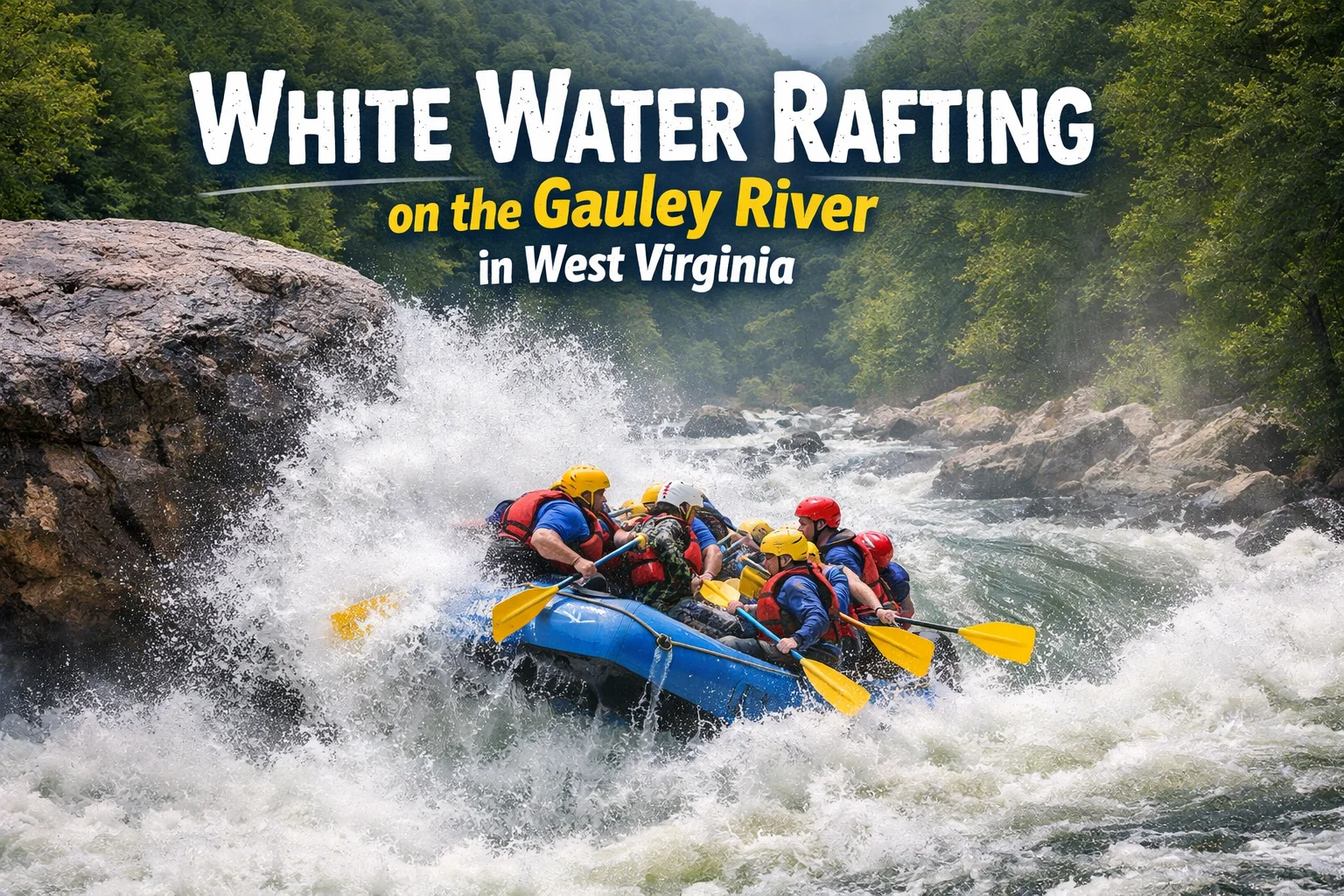
White Water Rafting on the Gauley River in West Virginia
Insignificant drops you 12 vertical feet less than a quarter mile from the put-in, and the name is absolutely a joke on anyone who thought the upper Gauley water rafting would ease them in gently.
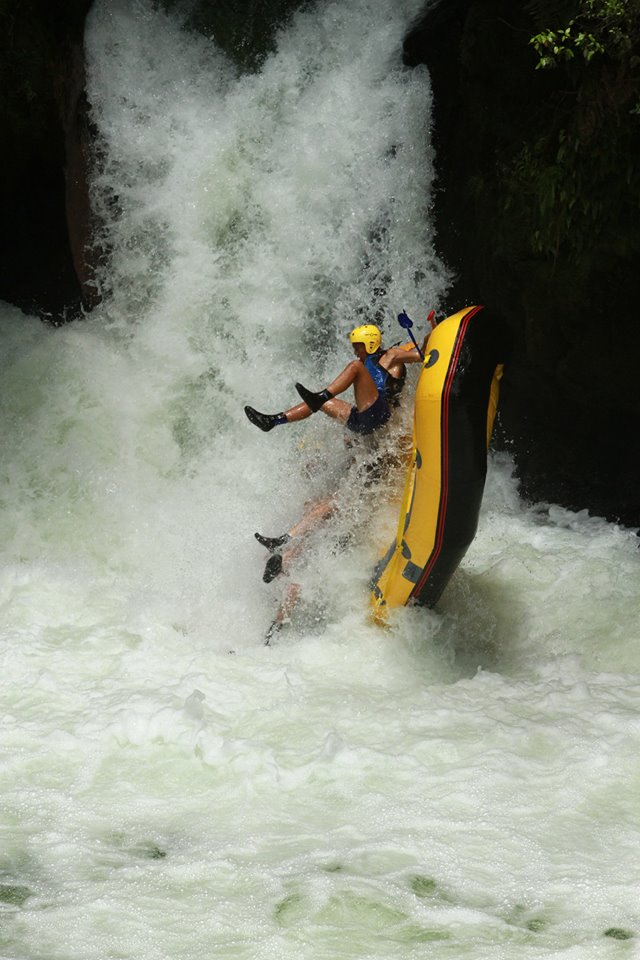
The rapid sits there with a nasty reversal that’s been flipping commercial rafts since 1981. During early fall releases when water’s pushing 5,000 cubic feet per second, that hole holds rafts long enough that swimmers float downstream, wondering if their boat is ever coming back up.
That first rapid tells you everything about what the Gauley River actually is. Not a scenic float. Just 28 miles of Appalachian whitewater is packed into a six-week window each fall when 60,000 people from six continents show up for white water rafting on the Gauley River in West Virginia.
The question isn’t whether it’s hard. You already know it’s hard. The question is whether it’s the specific kind of hard that matches what you’ve trained for, and whether you’re walking into it with the right understanding of what it demands.
Why Gauley River Water Rafting, West Virginia, Became the Premier Destination
The Gauley River wasn’t commercially raftable until the Army Corps finished Summersville Dam in 1968. Before that, it ran wild through one of the most isolated sections of West Virginia.
The dam changed everything. Starting in the early 1970s, the Corps began releasing water from Summersville Lake each fall. Those releases created a predictable high-water window.
Commercial operations started in 1981 when outfitters running New River Gorge rafting trips looked upstream and decided to test what was possible on the Gauley. According to American Whitewater’s archives, early guides faced flip rates at Pillow Rock approaching 40%.
But over four decades, self-bailing rafts replaced old bucket boats. Modern Type V PFDs provide far better flotation. Guides now go through formal swiftwater rescue certification. All of that means Gauley River white water rafting is measurably safer now than in 1985.
During peak September and October weekends, you’re sharing the river with 30 or 40 other commercial rafts. Some people love that energy. Others prefer the midweek releases when it’s quieter.
The Honest Case for Why Water Rafting Matters
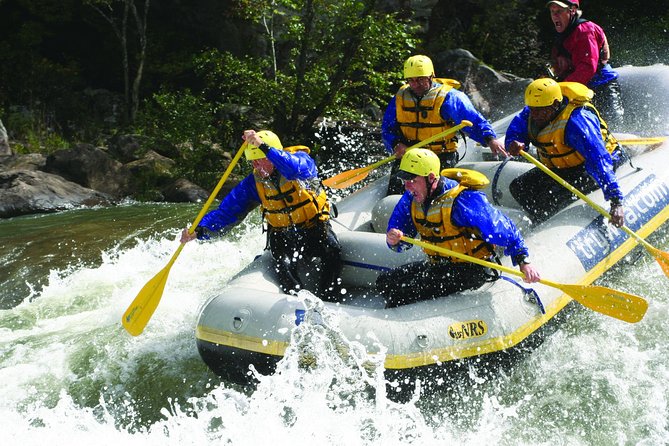
The Gauley isn’t the hardest commercially raftable whitewater in the world. Chile’s Futaleufú arguably takes that title. It’s not the most remote. But what it offers is the highest concentration of technical, consequence-heavy Class V rapids accessible to intermediate and advanced paddlers in the eastern United States.
You can fly into Charleston, rent a car, be at the Gauley River location the next morning, and run one of the most respected rivers in North America. Then be back home by Monday. That accessibility, combined with genuine difficulty, is why water rafting enthusiasts from Australia, Germany, and Japan show up every fall.
It’s 28 miles of Appalachian rivers and rapids that demand your full attention and reward competence.
The Five Skills That Keep You in the Boat
The upper Gauley River runs 12 miles with a gradient averaging 28 feet per mile. But the gradient alone doesn’t tell you what the Upper Gauley River rafting demands physically.
High-siding: When your raft tilts, you’ve got one second to throw your body weight to the high side. Hesitation is what flips boats. This is a trained response you build over multiple water rafting trips.
Aggressive paddling: The river punishes tentative strokes. Weak paddling means you don’t generate enough momentum to punch through hydraulics. Your shoulders will be screaming by mile 10. You keep pulling anyway.
Swimming competence: According to American Whitewater’s incident database, the upper Gauley River has a commercial flip rate between 5% and 15%. When you swim, you need to get your feet up immediately, float on your back, and let the current carry you without fighting.
Physical endurance: Upper Gauley rafting trips run five to seven hours. Rapids don’t stop coming because your lats are cooked. By mile 8, you’re running on mental toughness and whatever conditioning you built before the trip.
Fitness check: Can you paddle hard for three hours without your shoulders giving out? Run or bike for 45 minutes at a genuinely hard pace? Do 10 pullups or 20 pushups? If yes, you’re probably fit enough. If no, spend a month building base fitness before your trip. West Virginia rafting on the Gauley will still be there next fall.
What the Major Rapids In Water Rafting Actually Look Like
Watch Pillow Rock Runs From Multiple Angles
Pillow Rock sits at mile 2.5. It’s a house-sized boulder in the center of the main channel. The correct line threads between the rock and the right wall through a slot, maybe 12 feet wide. Miss that slope,t, and you either crash into the rock face or get pulled into the hole behind it. That hole has held 16-foot rafts underwater for long enough that swimmers end up 50 yards downstream before the boat resurfaces.
At 2,800 CFS, you can cheat right and avoid the worst hydraulics. At 5,000 CFS, there is no safe line. You pick the least terrible option and execute it perfectly.
The Western Creeker Problem In Water Rafting
Watch Different Paddling Approaches at Pillow Rock
Pillow Rock is where the difference between western creeking experience and eastern big-water experience shows most clearly. If you’ve done a lot of high-gradient Rocky Mountain rivers and rapids where success comes from precise angle control, this will surprise you. The correct line isn’t about finesse. It’s about committing to aggressive forward momentum. The Gauley rewards commitment over precision in a way that catches experienced technical paddlers off guard.
Pure Screaming Hell lives up to its name. It’s a long, technical Class V boulder slalom. The rapid funnels you through narrow slots between undercut rocks with violent cross-currents. It takes 90 seconds of continuous maneuvering with no reset opportunity. If your instinct from western creeking is to slow down and pick your line carefully, this rapid will punish that approach immediately during your upper Gauley white water rafting experience.
Sweet’s Falls
See the Blind Approach and 12-Foot Drop
A 12-foot,ot nearly vertical ledge that drops you into a boulder garden below. You approach it blind because the horizon line blocks your view until you’re 20 feet away. Guides beach rafts upstream to scout. According to National Park Service incident reports covering Gauley River National Recreation Area accidents from 1988 to the present, Sweet’s Falls accounts for a disproportionate number of serious injuries. Broken bones and dislocated shoulders from swimmers hitting rocks are the most common outcomes.
Lower Gauley Water Rafting: Difficulty and Guide Requirements
The Lower runs 14 miles with features that are spaced out. But calling it “easier” misses what makes it valuable for water rafting progression. It still throws consistent Class III and IV at you.
Here’s something most people don’t realize about Gualey River rafting on the Lower section: The Lower at 2,800 CFS can be more technically demanding for guides than the upper Gauley River at the same flow because it changes character with every hundred CFS of adjustment. The upper Gauley has established lines that work consistently. The Lower doesn’t.
When booking a multi-day trip, ask specifically whether your guide regularly runs the Lower and knows how it reads at the scheduled flow for your trip date.
New River Gorge Rafting vs. Gauley: The Two-Day Sequence
Compare New River and Gauley Rapids Side-by-Side
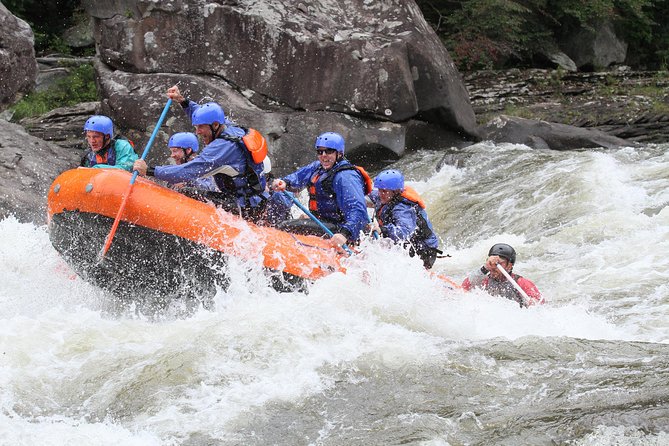
The New River sits 20 minutes from the Gauley River location. New River Gorge rafting offers excellent Class III to IV spread across a wider channel. Flow averages between 5,000 and 15,000 CFS, but spreads across a channel twice as wide as the Gauley. The New River, West Virginia section is beautiful, but it doesn’t match the raw power of the Gauley during dam release season.
Here’s what most two-day descriptions won’t tell you: The New River sits exactly between western technical rivers and the Gauley on the commitment-versus-precision spectrum. Your New River day on Saturday becomes the training ground where you start learning to trust aggressive forward momentum over precise positioning. Then, on one Sunday, that lesson gets tested immediately during your Upper Gauley West Virginia rafting experience.
New and Gauley River Adventures in Lansing has been running trips since 1981. More specifically, New & Gauley River Adventures in Lansing, WV, will assess your skill level honestly. Many people planning white water rafting WV Gauley trips book through this outfitter because of their dual-river expertise.
How Releases Work and Timing
The Army Corps publishes the schedule months in advance. They release water six weekends running from early September through mid-October. You can find the current year’s schedule on the Army Corps Huntington District website, usually posted by April.
Early season (September) pushes higher flows, often 4,500 to 5,500 CFS. This is when experienced water rafting veterans show up because it’s at maximum intensity. Late season (mid-October) releases drop to 2,800 to 3,500 CFS. Fall foliage peaks in early October. The Gauley white water rafting experience during peak color is as much about the landscape as the rapids.
Release cancellations: The Army Corps can modify or cancel scheduled releases due to downstream flooding, infrastructure maintenance, or operational needs. This has happened multiple times in recent seasons. Ask your outfitter specifically about their cancellation and rebooking policies. Most will offer New River, Virginia, as an alternative, but policies vary.
What “Prior Experience” Actually Means
You’re probably ready if you’ve completed at least three full-day Class IV trips on rivers like the Ocoee, Chattooga Section IV, or Arkansas River through the Numbers, and you stayed in the boat, followed commands without delay, and didn’t freeze during big drops.
The honest limitation: None of those three rivers shares the defining characteristic of continuous consequence without meaningful recovery pools. You can pass this benchmark honestly and still be fundamentally unprepared for what makes West Virginia white water rafting on the Upper Gauley River hardest: the mental and physical accumulation of continuous consequence over five to seven hours.
The benchmark screens for whether you’ve experienced serious individual features on various rivers and rapids. It doesn’t screen for whether you can maintain focus and paddle aggressively in hour five the same way you did in hour one. No single river fully simulates what white water rafting the WV Upper Gauley demands in terms of sustained intensity.
How to Choose an Outfitter
Watch Guides Handle Mistakes in Real Time
Ask outfitters whether they can show you unedited footage of their guides handling mistakes, not highlight reels. Watch what a guide does when a paddler drops their paddle mid-rapid, how they compensate by shifting position and adjusting the line, and what happens when a raft flips unexpectedly. The gap between a guide who freezes and a guide who immediately adjusts is the difference that matters most in Class V water during white water rafting on the Gauley River in West Virginia.
Guide-to-guest ratios: Some outfitters run one guide per raft. Others put two guides in every raft during high-water upper trips. That second guide matters when someone swims and needs immediate rescue.
Guide compensation: Outfitters who pay guides well, provide health insurance, and invest in ongoing training keep experienced staff. High turnover means you’re more likely to get a guide in their first season who’s still learning the sections.
What You Need to Bring
Bring your own swimsuit or synthetic base layer. Cotton is a disaster because it stays wet and leeches body heat. Bring river shoes with secure heel straps—old running shoes work, Chacos or Tevas are better. Bring reef-safe sunscreen, water bottle, towel, and a complete change of dry clothes.
Cameras are risky. The river destroys GoPros regularly. Most outfitters offer professional photo packages where a photographer shoots your raft coming through major features.
Planning Logistics
Fayetteville is the hub, 15 minutes from most put-ins in the Gauley River National Recreation Area. Book lodging by June for peak September or October weekends. Fayetteville fills. Options include chain hotels, local motels, and vacation rentals.
Fly into Charleston Yeager Airport, about 45 minutes from the Gauley River location. By car: Washington D.C. is 5 hours, Charlotte is 6 hours, and Atlanta is 7 hours. Rent a car—you’ll need it.
Between river days, walk the catwalk under New River Gorge Bridge, hike trails in New River Gorge National Park, or check out local food at Pies & Pints and Secret Sandwich Society.
What You’re Committing To
The Four Skills Demonstrated in Action
If you’ve been paddling long enough to know the difference between a good river and a genuinely great one, this delivers. It will test the four skills outlined earlier, exhaust you physically, demand better teamwork and faster reactions than most rivers you’ve run before, and teach you the difference between paddling that relies on precision and paddling that requires commitment. That last lesson applies to every big-water water rafting experience you run after this one.
Modern equipment and professional guides have made Gauley white water rafting safer, but they haven’t made it easy. Crowded weekends have changed the character from what it was in 1985, but the Gauley River in West Virginia itself still runs the same.
Plan the trip. Book early enough to get the dates you want. Ask about release modifications. Get your outfitter’s policy on Corps release cancellations before you commit to non-refundable travel. Train properly. Show up ready for big-water hydraulics that reward commitment over precision, continuous intensity that doesn’t let up, and a six-week window of autumn whitewater that draws people from six continents for good reason.
Insignificant is waiting less than a quarter mile from the put-in. And it still flips boats that aren’t ready.
Frequently Asked Questions
What is white water rafting?
Navigating river rapids in an inflatable raft with a crew and trained guide through turbulent, aerated water.
Where is white water rafting in West Virginia?
Gauley River location near Summersville and New River near Fayetteville, both in south-central protected recreation areas.
What are the white water rafting levels?
Class I-VI scale rates difficulty. The Upper Gauley River section has Class IV-V. Higher classes mean greater consequences and require expert skills.
What is the difference between Gauley River rafting and New River trips?
Gauley River rafting offers continuous Class IV-V intensity during fall releases, while New River trips provide Class III-IV rapids year-round with more recovery pools.
Is the Gauley River suitable for beginners?
The Gauley River is not recommended for beginners on the Upper section due to Class V rapids; beginners should start with the Lower section or New River.
How do I find the exact Gauley River location for put-ins?
The primary Gauley River location for Upper section put-ins is near Summersville Dam, while Lower section access points are near Summersville; outfitters provide transportation from Fayetteville.
What makes the rivers and rapids on the Gauley unique?
The rivers and rapids on the Gauley feature high-volume hydraulics compressed through narrow channels, creating powerful holes and waves that demand aggressive forward momentum.
What should I know about Gauley River white water rafting safety?
Gauley River white water rafting safety depends on choosing reputable outfitters, wearing proper gear, following guide commands immediately, and honestly assessing your swimming ability and fitness.
Why is Gauley River, West Virginia, famous?
Gauley River in West Virginia is famous for its six-week release, delivering over 100 rapids in 28 miles, including legendary Class V features like Pillow Rock and Sweet’s Falls.
How do I plan a rafting WV Gauley trip?
To plan a rafting WV Gauley trip, check the Army Corps release schedule, book outfitters 2-3 months in advance, arrange lodging in Fayetteville, and confirm cancellation policies.
Which outfitters offer new and Gauley River adventures?
New and Gauley River Adventures is a long-standing outfitter operating since 1981, offering multi-day packages that combine both rivers with experienced guides and comprehensive safety protocols.
What is included in the New River Gorge rafting packages?
New River Gorge rafting packages typically include guided trips on Class III-IV rapids, equipment rental, transportation, and sometimes meals; many outfitters bundle these with Gauley trips.
How popular is West Virginia rafting gauley during the fall?
West Virginia rafting Gauley draws approximately 60,000 visitors during the six-week fall season, making it one of the busiest whitewater destinations in the eastern United States.
What is the best time for Gauley white water rafting?
The best time for Gauley white water rafting is during scheduled dam releases from early September through mid-October, with higher flows in September and technical lower flows plus fall foliage in October.
What makes the Upper Gauley River rafting challenging?
Upper Gauley River rafting is challenging due to continuous Class IV-V rapids with minimal recovery pools, requiring sustained physical endurance, aggressive paddling, and precise crew coordination over five to seven hours.
Is white water rafting on the Gauley River in West Virginia safe for intermediates?
White water rafting on the Gauley River in West Virginia can be safe for intermediates with solid Class IV experience who choose the Lower section or join guided Upper trips.
What regulations apply in the Gauley River National Recreation Area?
The Gauley River National Recreation Area requires permits for private trips, enforces equipment checks, and manages commercial use to protect the river corridor while maintaining public access.
Where can I book new & Gauley River adventures, Lansing, WV?
You can book new & gauley river adventures, Lansing, WV, directly through their website or by phone; they offer dual-river packages and have decades of experience guiding both sections safely.
How does New River, Virginia, compare to the Gauley?
New River, Virginia, flows through both states and offers year-round rafting with Class III-IV rapids, serving as an excellent training ground before attempting the more intense Gauley releases.
What should I expect on the Upper Gauley section?
The upper Gauley section delivers 12 miles of relentless whitewater with over 60 named rapids, including Pillow Rock, Lost Paddle, and Sweet’s Falls, demanding full focus and physical stamina.
How does the Upper Gauley River differ from the Lower?
The Upper Gauley River has a steeper gradient and continuous Class IV-V rapids, while the Lower section features more spaced-out Class III-IV rapids with longer recovery pools.
What is the difficulty level of Upper Gauley rafting?
Upper Gauley rafting is rated Class V, featuring long, violent rapids with unavoidable hazards that require expert boat handling, swift reactions, and the ability to swim confidently in powerful whitewater.
How do I prepare for Upper Gauley, West Virginia, rafting?
Prepare for Upper Gauley, West Virginia, rafting by building cardiovascular endurance, upper body strength, and swimming competence; run multiple Class IV rivers first to develop necessary paddling skills.
What makes Upper Gauley white water rafting unique?
Upper Gauley white water rafting is unique for its combination of high-volume hydraulics, technical boulder gardens, and continuous intensity that rewards aggressive commitment over precise angle control.
Why is West Virginia’s white water rafting on the Upper Gauley River globally recognized?
West Virginia white water rafting, Upper Gauley River, is globally recognized for delivering world-class Class V whitewater accessible within a predictable seasonal window, drawing paddlers from six continents annually.
How do I find white water rafting in WV, Gauley Outfitters?
Search for white water rafting in West Virginia, Gauley Outfitters through state tourism boards, American Whitewater resources, and review platforms; prioritize companies with long histories and transparent safety records.
What should I know about white water rafting in the WV Upper Gauley releases?
White water rafting in WV Upper Gauley releases occur on scheduled weekends; confirm dates with the Army Corps, book early, and verify outfitter policies regarding potential release modifications or cancellations.