
Why Most Lower Ab Workouts Fail (And What Actually Works)
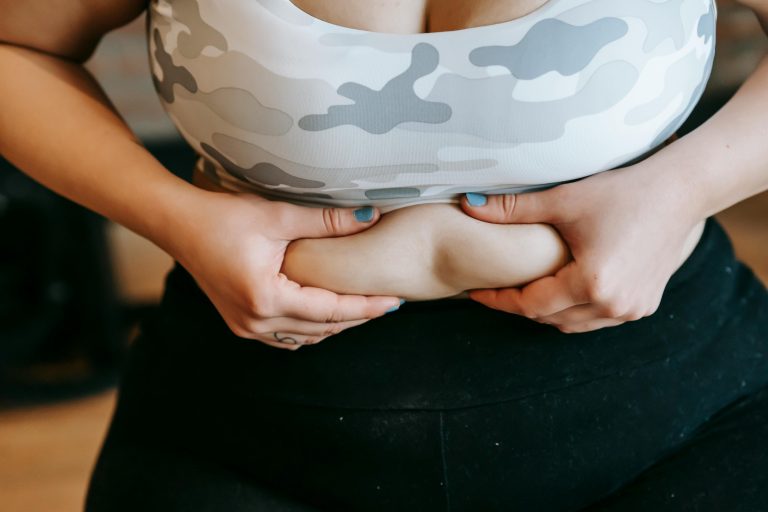
You are not broken. And your lower belly is not some personal failure. It is stubborn on purpose. That area is usually the last place your body lets go of fat. Even people who train hard every week deal with it. You have probably tried everything. High rep crunches. Long lower ab workouts circuits that leave you flat on the floor. Those “low ab burnouts” that promise magic in 30 days. You feel the burn, and sweat. You think, this has to be working. Then you catch your reflection. And you still find yourself pulling your shirt down. That is frustrating. I get it.
Here is what most people never hear. Your lower abs are not changing because you are chasing the burn. You are chasing the feeling instead of real progress. Abs are not built by how much they shake. They are built by control. By learning how to brace properly, and by keeping your pelvis stable.
By pairing smart training with habits that actually move the needle. I have coached hundreds of people through this exact phase. The same doubts, the same mirror checks, and the same “why is nothing happening” feeling. And here is the part that should give you relief. When you train the right way, your lower abs do respond. You do not need crazy moves, and you do not need to destroy your spine with endless leg raises. All you need is structure. You need progression. You need patience with your lower ab workouts. Let’s walk through this properly. Step by step. So every rep finally starts doing its job.
Table of Contents
- The real problem (and why you feel stuck)
- Spot reduction: what research actually says
- How do you work the lower abs without overthinking it
- Breathing, bracing, and why your back takes over
- Anti-extension vs anti-rotation (the missing piece)
- Why leg raises turn into hip flexor work
- What actually works (simple, repeatable system)
- Comparison table: crunch vs reverse crunch vs hanging raise
- A practical training plan (2 to 3 days per week)
- Fat loss basics: NEAT, sleep, stress, and the “low ab pooch.”
- Realistic results and what to track
- Conclusion
- References
1) Lower Ab Workouts: Real Problem
Most people come in with one of these:
- “My lower stomach won’t flatten.”
- “I’m strong, but my abs don’t show.”
Those aren’t the same issue.
If you can’t see your abs, it’s usually a body fat thing first. That’s not me being harsh. That’s just how bodies work. And the annoying part is the lower belly tends to be the last place to lean out for a lot of people. Genetics. Hormones. Stress. Sleep. The whole messy human package.
Then there’s the training side.
A lot of “core” work is really hip flexor work plus lower back tension. So you’re working hard, but not in a way that makes your midsection look tighter or perform better.
Bold truth: your abs don’t need more suffering. They need a better target.
Key Takeaway: When you feel stuck, it’s usually (1) no real progression, (2) poor bracing, and (3) fat-loss habits that don’t match the goal.
2) Lower Ab Workouts: Spot reduction
This is the myth that refuses to die.
Doing tons of ab work does not reliably melt fat off your stomach. Studies have tested this, including lower ab workouts. One trial had people do focused abdominal training, and they didn’t lose meaningful belly fat compared to the control group. (Vispute et al., 2011) Older research and broader exercise physiology findings point in the same direction: spot reduction isn’t a consistent thing. (Katch et al., 1984)
Now, before someone jumps in with “but I did crunches, and my stomach got flatter,” two things can be true:
- Your abs can get stronger and tighter from training.
- Your body fat changes based on overall energy balance and habits.
Coach experience: The people who get visible abs usually aren’t doing the most ab circuits. They’re the people who lift, walk, sleep decently, and don’t eat like it’s a weekend seven days a week.
Key Takeaway: Ab training builds the muscle. Fat loss reveals it. Reps alone won’t peel the layer off.
3) How do you work the lower abs without overthinking it
This is the question I hear constantly: how do you work the lower abs?
Simple answer: you can’t “isolate” the bottom half like it’s its own muscle. But you can bias it.
Most “lower-focused” work comes down to controlling your pelvis and your ribs while your legs move. That’s it.
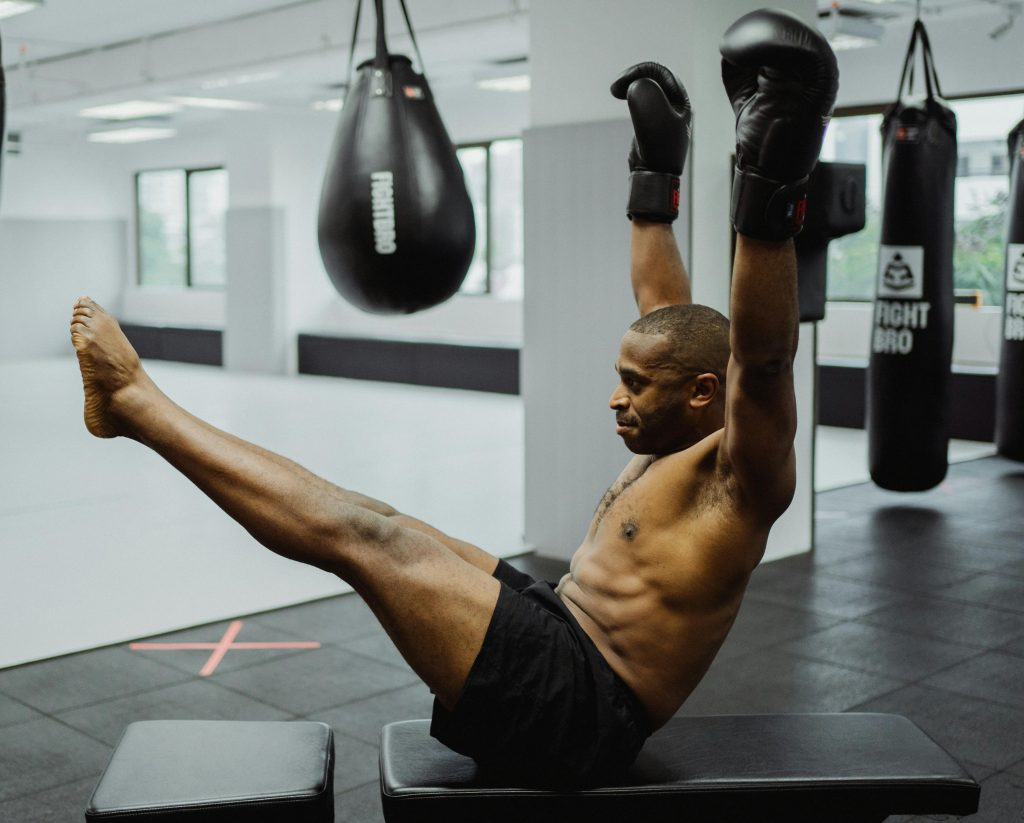
In the real world, the best lower abdominal exercises tend to be the ones where you can’t cheat with momentum. Reverse crunches. Hanging knee raises are done slowly. Dead bugs that are actually strict.
If you’re just flinging your legs around, you’re not training your abs. You’re practicing swinging.
Key Takeaway: “Lower abs” show up when you can control pelvic tilt and keep your ribs from popping up as your legs move.
4) Breathing, bracing, and why your back takes over

This is the part that feels weird at first. But it’s huge.
Breathing changes your rib position. Rib position affects your lower back. And if your lower back is arched, your abs are basically stuck in the passenger seat.
Here’s the quick check I use with clients:
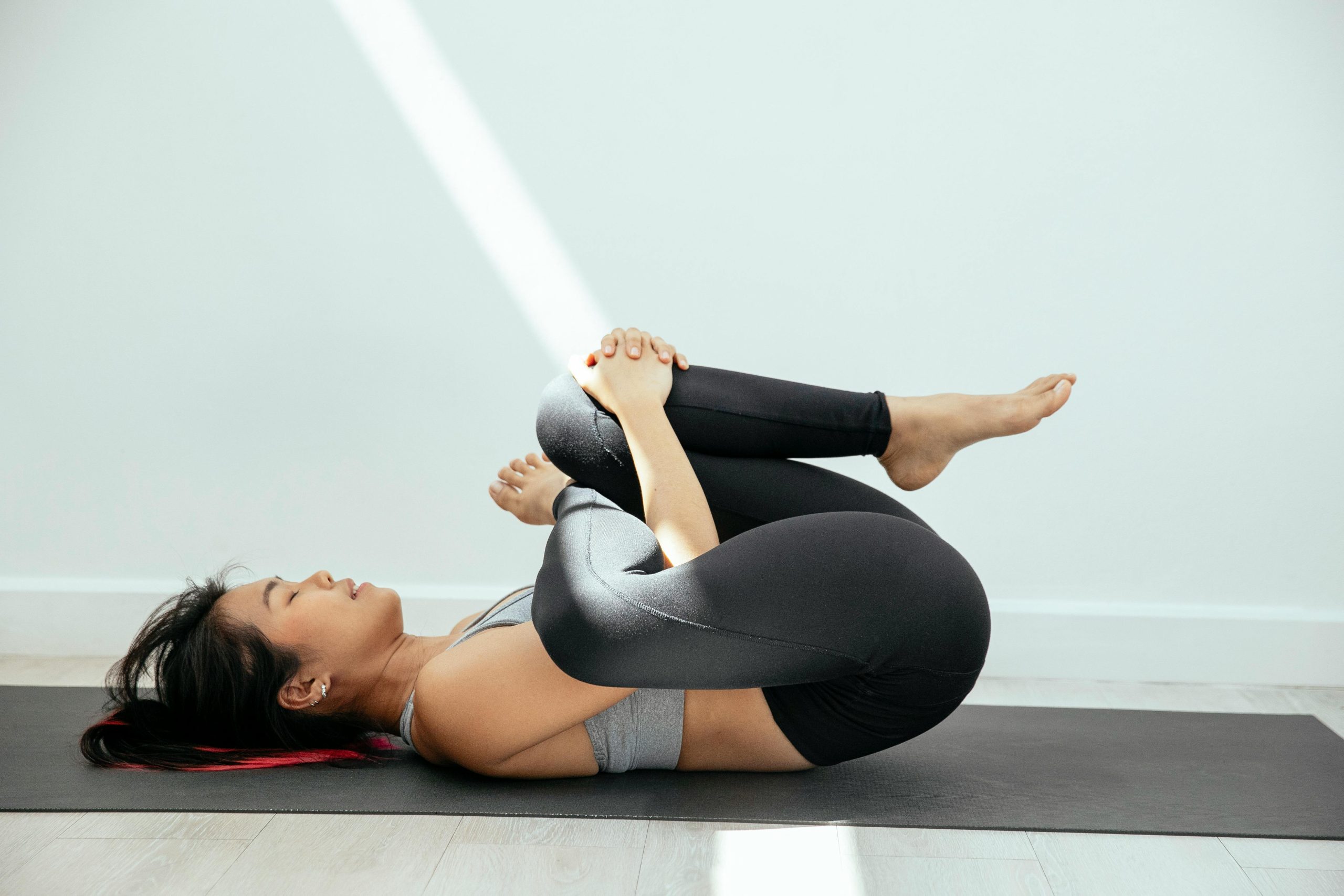
- Lie on your back. Knees bent.
- Exhale like you’re trying to blow out a candle across the room.
- Feel your ribs come down.
- Then brace lightly like someone’s about to poke your stomach.
Now do your rep.
If you skip the exhale and just inhale big into your chest, your ribs flare up. Your back arches. And suddenly your “ab” exercise turns into a low-back endurance test.
Micro-insight: If you can’t keep ribs down, you don’t need a harder move. You need a cleaner rep.
This is why I’ll regress people to dead bugs or heel taps and make them earn the fancy stuff. Not because I’m mean. Because it works.
Key Takeaway: The exhale sets the abs up to work. Ribs down, brace, then move. Otherwise, your back takes the shift.
5) Lower Ab Workouts for Anti-Extension and Anti-Rotation Strength
Most people train abs like abs, only do crunches.
But day-to-day, your core is mostly doing the opposite. It’s resisting movement so you don’t fold, arch, or twist under load.
Two big categories:
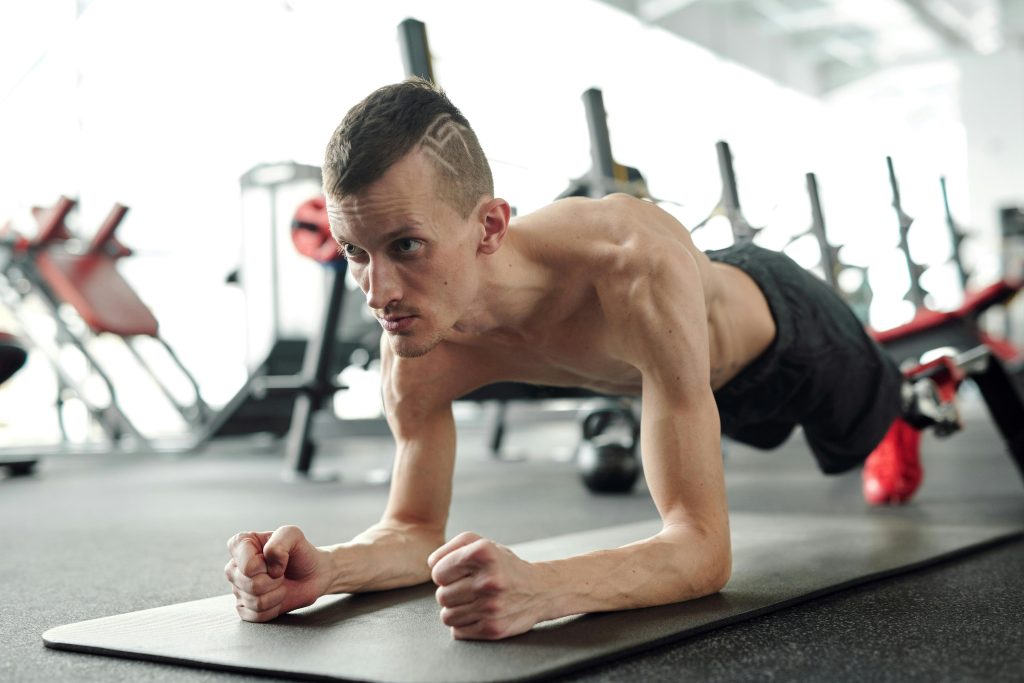
- Anti-extension: resisting your lower back arching. Dead bugs, rollouts, strong planks.
- Anti-rotation: resisting twisting. Suitcase carries, Pallof presses, and single-arm carries.
Why does this matter if you just want your stomach to look better?
Because when someone gets stronger at these, they usually “hold themselves” differently. Less rib flare. Less belly pushing out. Better posture under fatigue. It’s not magic. It’s control.
And honestly, it helps your lifting, too. Squats, pulls, presses… all of it.
Key Takeaway: Flexion is fine, but it’s incomplete. Anti-extension and anti-rotation are what make your torso look and feel solid.
6) Why leg raises turn into hip flexor work
Leg raises are not evil. They’re just easy to mess up.
Here’s what happens when they go wrong:
Your hip flexors lift your thighs. If your abs can’t keep your pelvis tucked, your pelvis tips forward as your legs lower. Now your lower back arches. That’s the “hinge” your body will use to get through the reps.
So you feel it in the front of the hips and maybe your back, but you call it lower abs because you’re tired and it burns.
To fix it:
- Start with reverse crunches and dead bugs.
- Use bent knees before straight legs.
- Slow down the lowering.
- Pause at the top and tuck the pelvis.
Micro-insight: If your legs drop faster than your ribs can stay down, your hip flexors are driving.
Key Takeaway: Hip flexors dominate when you lose pelvic control. Earn the leg raise by mastering the tuck first.
7) Why Lower Ab Workouts Matter

Here’s the system. It’s not glamorous. That’s why it works.
What Actually Works (quick box)
- Pick 1 anti-extension move
- Pick 1 “lower-biased” curl (reverse crunch or hanging knee raise)
- Pick 1 anti-rotation move
- Progress weekly (reps, tempo, range, or load)
- Keep steps and protein consistent
That’s the whole deal.
And yes, weighted ab workouts can be a good idea once you own the basics. Abs grow and get stronger when you challenge them. Same as any other muscle.
As for gym equipment for abs, you don’t need a ton. A cable stack helps a lot with progressive loading. A pull-up bar is great. An ab wheel is cheap and nasty in the best way. Beyond that, it’s a bonus.
Key Takeaway: Three smart moves, progressed over time, beat random ab chaos every week.
8) Comparison table: crunch vs reverse crunch vs hanging raise
| Exercise | Best for | Common mistake | Better cue |
| Crunch | Learning flexion control | pulling neck, tiny range | “Ribs down, curl slow.” |
| Reverse crunch | Pelvic curl, “lower” bias | swinging legs | “Flatten back, curl hips.” |
| Hanging knee raise | Strong brace under load | hip flexors take over | “Tuck pelvis at top.” |
Key Takeaway: Reverse crunch is usually the best starting point. Hanging work is awesome once you can control your pelvis.
9) A Practical Lower Ab Workouts Training Plan
Keep this simple. Do it after lifting. 10 to 15 minutes. No drama.
Day A (control and tuck)
- Reverse crunch
3 x 8 to 12, 3 seconds down - Dead bug
3 x 6 per side, full exhale each rep - Suitcase carry
3 x 40 to 60 seconds per side
Day B (strength and load)
- Cable crunch
4 x 8 to 10, heavy and clean - Hanging knee raise
3 x 6 to 10, pause at top - Ab wheel rollout or long plank
3 x 6 to 10 rollouts, or 3 x 30 to 45 sec
Want ab exercises with dumbbells? Add a dumbbell reverse crunch (light dumbbell between feet) on Day A. It’s one of my favorite “quiet killers.”
Carries also count as legit dumbbell core exercises. And if you’re building a home routine, dumbbell ab exercises plus carries can take you far without fancy machines.
Key Takeaway: Train core 2 to 3 times weekly, progress one thing at a time, and let consistency do the heavy lifting.
10) Fat loss basics: NEAT, sleep, stress, and the “low ab pooch.”
This is where people hate me a little, because it’s not a cool new exercise.
NEAT: the fat loss multiplier
NEAT is all the movement you do outside of workouts. Walking, chores, standing, taking stairs. And it varies wildly person to person. Research from Levine highlights how big that swing can be and how much it can impact energy balance. (Levine, 2002)
So yeah, steps matter.
Sleep and stress: not magic, but real
Sleep restriction has been linked with changes in appetite hormones and increased hunger, plus worse metabolic outcomes. (Spiegel et al., 2004) Stress doesn’t “store fat in your belly overnight,” but it can wreck consistency. Cravings go up. Sleep gets worse. You move less. You snack more.
And then that stubborn lower area hangs around, so you add more abs… and the cycle continues.
Coach reality: When a client goes from 5 hours of sleep to 7, their whole plan gets easier. They’re calmer. They eat more predictably. Fat loss finally starts moving again. That’s not hype. That’s Tuesday.
Key Takeaway: If the “low ab pooch” won’t budge, check steps, sleep, and stress before you add more sets.
11) Realistic results and what to track
If you do this consistently, here’s a fair timeline.
- 4 weeks: better bracing, cleaner reps, less arching
- 8 weeks: stronger core, better posture, visible changes if nutrition is steady
- 12 weeks: noticeable physique change for most people, with abs showing, depending on the starting point
Track:
- reps or load (so you actually progress)
- steps (NEAT baseline)
- waist measurement or photos every 2 to 4 weeks
Not daily scale spirals. Not mirror mood swings. Just the data you can use.
Key Takeaway: Skill and strength show up first. Visual definition follows when body fat drops.
Conclusion
If you have been smashing your core and seeing almost no change, it is not because you are incapable. It is because most routines focus on sweat instead of skill. On random finishers instead of fundamentals. On intensity instead of progression. The basics win. Learn to breathe and brace properly. Train movements that resist extension and rotation. Increase difficulty slowly.
Support your training with daily steps, decent sleep, and solid nutrition. Add load when you earn it. Do not rush it. Abs respond to consistency. They do not respond to chaos. Run this core plan two or three times a week for the next four weeks. Track your reps. Track your load. Track your steps. Take photos so you have proof. Focus on getting better, not being perfect. Then one day, you will catch your reflection and pause. Not because you are adjusting your shirt. But because you finally see the change. Not just the burn. The result. That is what patient, intelligent training looks like.
Want more workout tips? Read this article:
- Top 15 Online Jobs for Teens That Require Minimal Skills
- Tech Regulation 2026: The Social Media Mental Health Trial Has the Potential to Transform Big Tech
References
- Vispute, S. S., Smith, J. D., LeCheminant, J. D., & Hurley, K. S. (2011). The effect of abdominal exercise on abdominal fat. Journal of Strength and Conditioning Research.
- Katch, F. I., et al. (1984). Findings across exercise physiology research: localized fat loss is not consistently supported.
- Levine, J. A. (2002). Non-exercise activity thermogenesis (NEAT). The American Journal of Clinical Nutrition.
- Spiegel, K., Leproult, R., & Van Cauter, E. (2004). Sleep debt and metabolic/endocrine changes. The Lancet.
- Phillips, S. M., & Van Loon, L. J. C. (2011). Dietary protein and body composition adaptation. Journal of Sports Sciences.